Halloween Earrings DIY
These faux leather teardrop earrings create whimsical Halloween fun with Halloween faux leathers and the word “boo.”
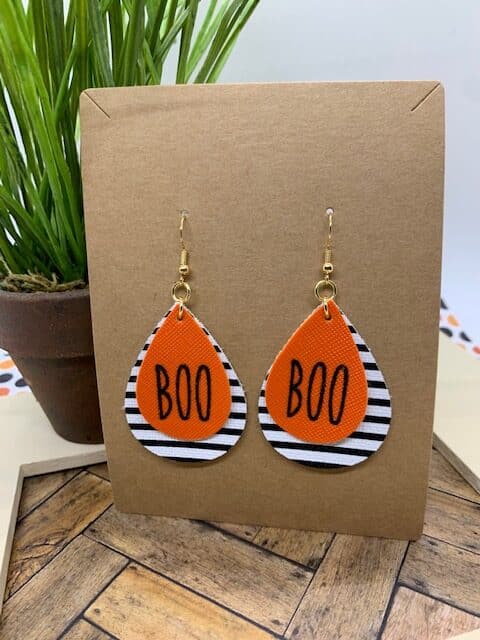
This Halloween earrings DIY is a quick and easy project. There are so many great faux leather options perfect for Halloween! In this post, I’ll show you several versions of this Halloween teardrop earrings project. Ill link up my materials to help you repeat the project with the same materials. I’ll also share how-to basics for creating faux leather earrings with a Cricut machine.
Disclosure: This page may contain affiliate links. If you purchase through these links, I may earn a commission at no extra cost to you.
Faux leather earrings and genuine leather earrings are easy to make by cutting the leather and faux leather on your Cricut machine. You can easily cut all of these materials on a Cricut Explore or Cricut Maker. Cut the leather materials and add earring jump rings and hooks and you’re ready to go. In this project I also use heat transfer vinyl (HTV) to create the word “BOO” for that added Halloween touch.
Check out my favorite earring essentials on Amazon here!
Check out my favorite earring materials on Amazon here!
My Favorite Cricut Machine Options


Cutting Tool and Accessory Essentials


Must Have Earring Tools




Must-Have Earring Findings

Heat Press Essentials





Heat Transfer Vinyl
I used to only purchase Cricut brand HTV; however, the colors are very limited. I know enjoy the large range of HTV colors available on Amazon. Check them out here.
Black and white stripe faux leather
Orange Saffiano Faux Leather
Black heat transfer vinyl
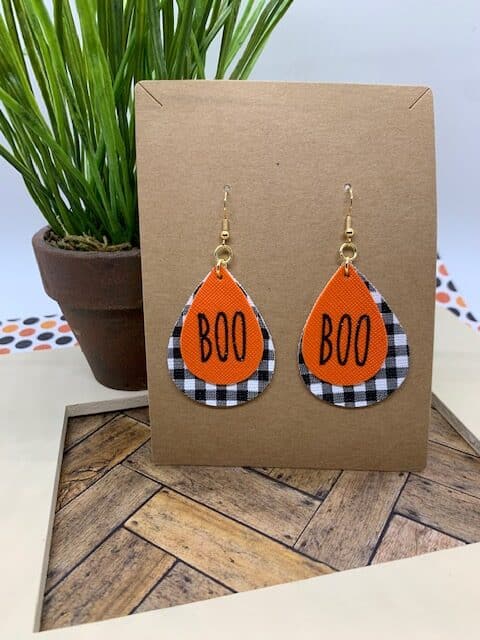
Orange Saffiano Faux Leather
Halloween mini buffalo plaid (black and white)
Black heat transfer vinyl
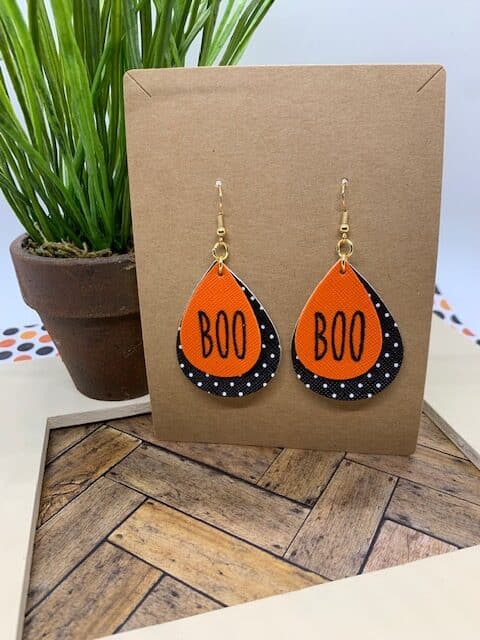
Orange Saffiano Faux Leather
Black and white mini polka dots
Black heat transfer vinyl
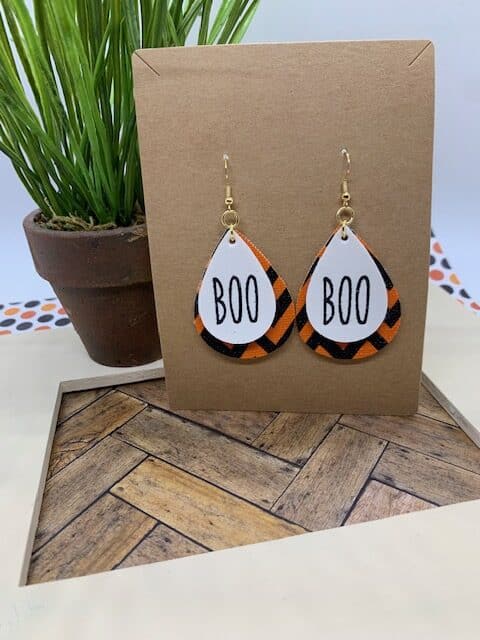
Orange and black chevron
White smooth faux leather
Black heat transfer vinyl
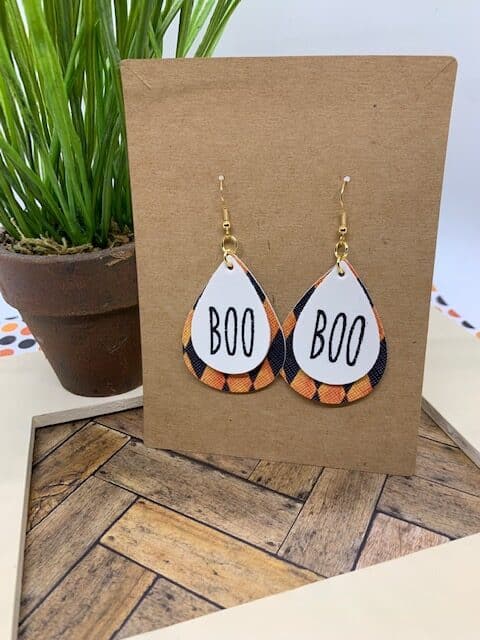
Orange and black diamond faux leather
White smooth faux leather
Black heat transfer vinyl
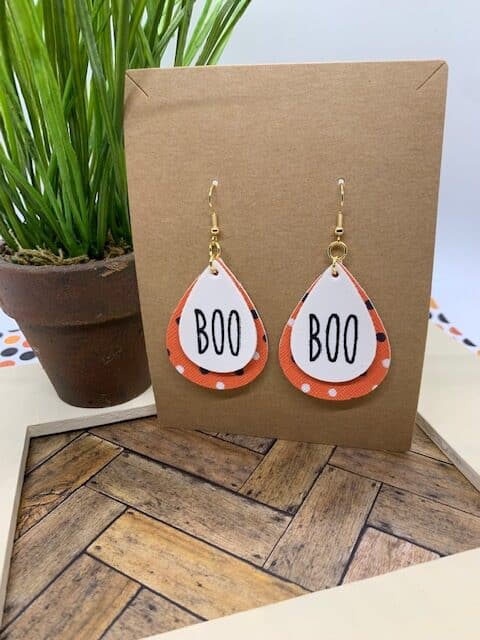
Orange with black and white polka dots
White smooth faux leather
Black heat transfer vinyl
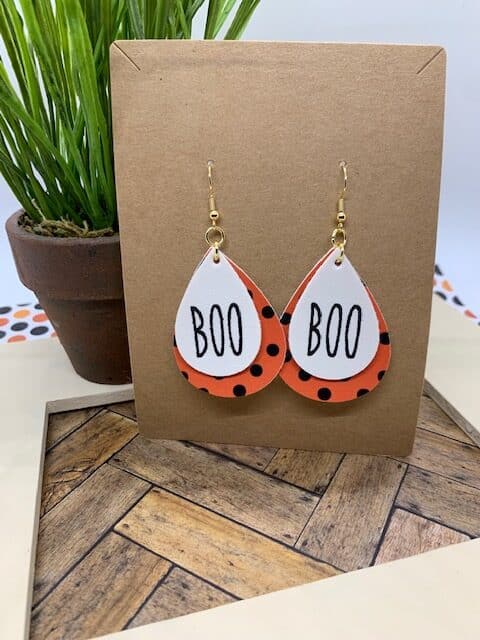
Orange with black polka dot faux leather
White faux leather
Black heat transfer vinyl
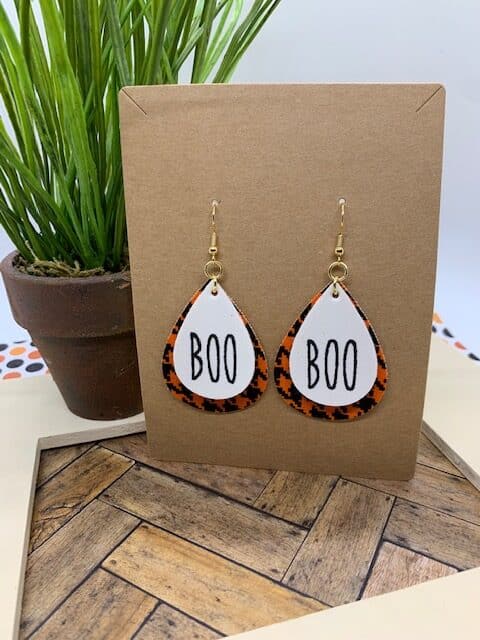
Orange and black houndstooth faux leather
White faux leather
Black heat transfer vinyl
SVG File
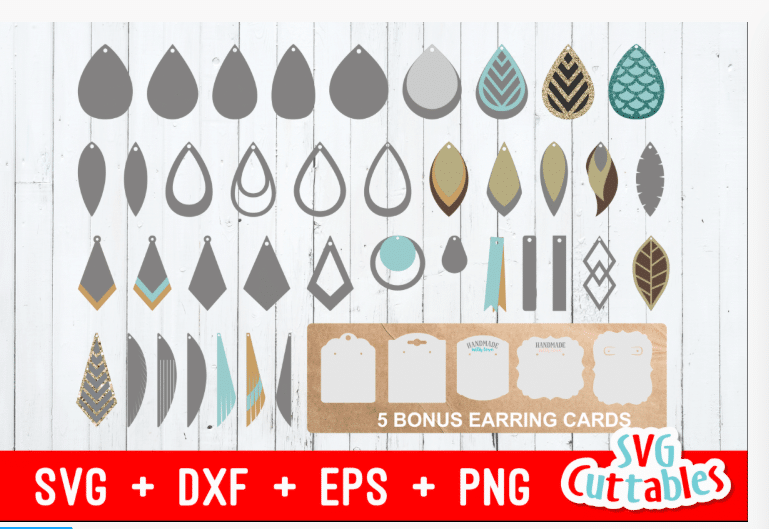
You can find many templates for your earrings on Design Bundles, Pinterest and Etsy. Some bloggers offer them for free and others are available for sale on various websites.
There are a lot of great basic teardrop earring SVG files. If you’re just getting started, here is a great SVG file option. My blog has posts about projects using many of the earrings from this SVG file (see all the links to my earring projects at the bottom).
Materials Cricut Settings
Click on the Browse All Materials link to see the menu of materials options on your Cricut.
When I use non-Cricut faux leather, the Shimmer Leather option normally works best for me. For this Halloween earrings diy, I used the Shimmered Leather option for all of the project photos shown.
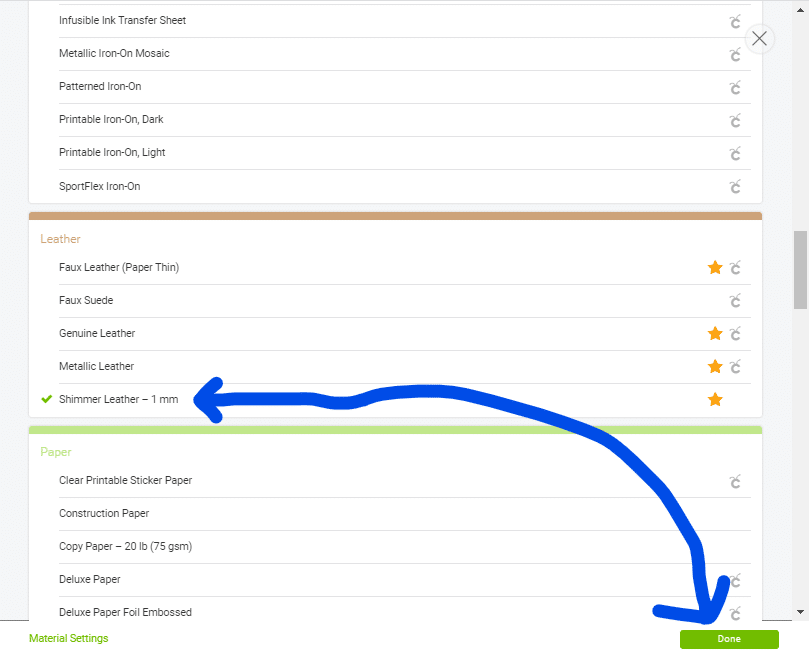
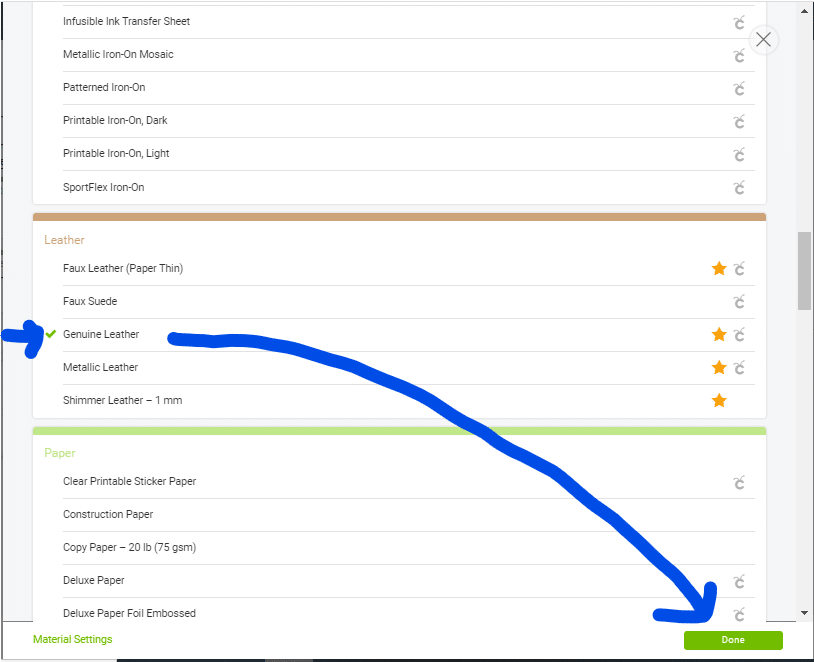
You can also use genuine leather to cut real leather Halloween teardrop earrings. When doing this, I normally select the Genunine leather option from the Material Settings menu. I also use the genuine leather setting when I use Heat n Bond to adhere two thicker pieces of faux leather together (making double-sided faux leather) before I make my cuts.
Star Wheels
The Cricut machine has star wheels to keep materials from shifting during cutting. However, when cutting thicker materials, the star wheels can leave track marks. When you select a material from the browse menu that is thicker, the Cricut machine will prompt you to move the star wheels to the right. Be sure to move the star wheels when cutting genuine leather so that you don’t get track marks on your genuine leather.

Cricut Blade Selection
Make sure you are using the right blade.
You can cut faux leather, faux suede, cork, and leather on the Cricut Explore Air and Cricut Maker. When cutting faux leather, cork sheets, and faux suede, you can use the Cricut standard fine point blade. If you’re cutting genuine leather, you’ll need to use the Cricut deep blade. When I am working with a really thick glitter sheet, I do sometimes change to a deep cut blade.
Placing material on the cutting mat(s)
The approach you use to place the material on your mat plays a big role in your material cutting success.
How to get the material to stick to mat?
Using an extremely sticky mat is one of the most important keys to get a good cut in the material. Some people attach the material to the mat with tape. I’m not a big fan of this because while it keeps the leather down on the edges, this approach doesn’t help the hold on other parts of the leather. For this reason, you won’t see me use tape very often.
That said, I always use tape any time I am cutting chunky glitter faux leather. I do this because the chunky glitter faux leather will not stick to the mat, regardless of how sticky the mat is. I usually use painters tape; however, since I was out of painters tape, I used transparent tape and it worked fine (although, I hate pulling transparent tape off of my mats as it really sticks). I also like painters tape because I use it multiple times.
Regardless of the material type, I always start by putting transfer tape on my mat. This approach keeps my mat clean and it also holds the material down really well (with the exception of glitter sheets) because it’s super sticky .
I use strong grip transfer tape for more challenging cuts and standard grip for other cuts. And sometimes I even use shelf liner paper from the Dollar Tree. Dollar Tree contact paper shelf liner paper does not very strong so I only use it on materials without stretch and cuts that don’t have center cut outs.
I find that the center cutouts in earrings create a lot of pull on the material and I need something strong holding the material on my mat during the cut. I cut a piece of transfer paper the size of my material and put it on the mat.
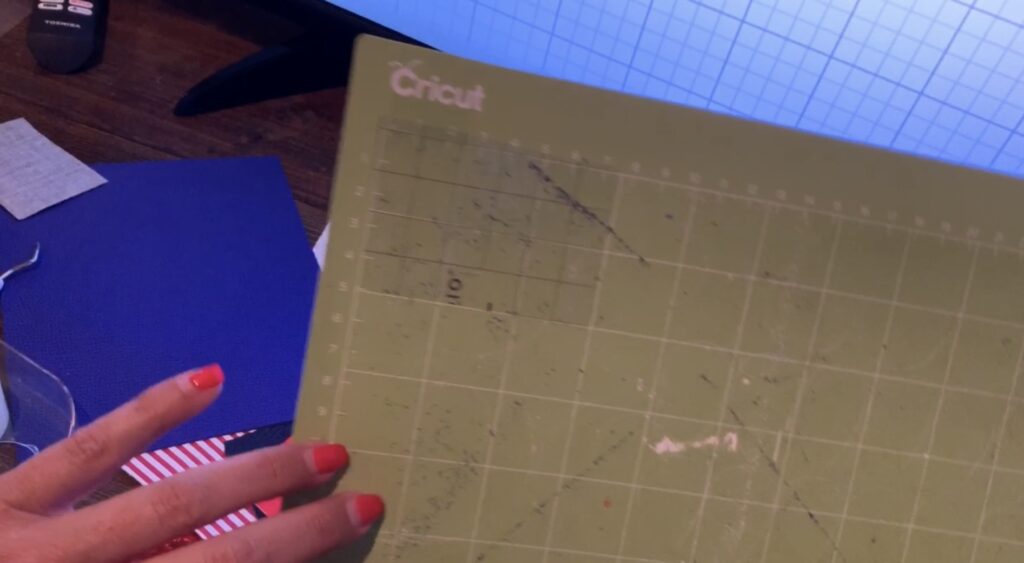
Material face down or face up?
My answer: it depends.
I used to always face my materials on the mat with the good side facing down. But a lot has changed for me over the years, and more specifically recently as I’ve begun to cut more printed and soft textured leathers.
There is nothing worse than buying beautiful printed leather and pulling it up from your mat to find that some of the print has pulled off. For this reason, I’ve begun to place these items (printed leathers) onto my mat with the good side facing up. But beware, if you don’t have transfer tape on your mat you will leave a BIG mess behind.
For chunky glitter, I place my faux leather glitter sheet onto the mat with the glitter side facing down and then tape the piece onto the mat.
I normally place my faux leather onto the mat with the good side facing down. And when cutting cork sheets, I most often put the material onto my mat with the good side facing up. I’ve cut it with the good side facing down as well, and it works that way too. Often, my material is adhered back to back prior to my cut (with Heat n Bond), so a good side has to be facing down.
Using a Cricut Brayer
After placing the material on the mat, I always use a Cricut Brayer roller to press it nicely onto the mat. Again, getting a good stick of the material onto the mat is SUPER important for a good cut.
Size of Earrings
The size of earrings is a matter of preference.
For this project, I made the front teardrop 1.6″ long and the back one 1.9″ long.
Making Earrings Two Sided
The back of some faux leather and faux suede earrings aren’t very attractive because they are often canvas or felt. I often cut an extra faux leather or faux suede piece for the back of the earring and I glue a second piece to the back of it. This way if the earring turns, the felt or canvas isn’t exposed.
There are two approaches I take to do this.
- Sometimes I cut the earrings and then glue them back to back. To do this, I glue two earrings together using either Crafter’s Pick Fabric glue or Aleene’s Fabric Glue.
- I adhere two pieces of faux leather or cork sheets together using Heat n Bond BEFORE I cut the leather. This is my new FAVORITE way to work. By gluing them together before I cut, my cuts are beautiful and it saves me a ton of time.
Trim any felt, fuzz, or glue from the earrings.
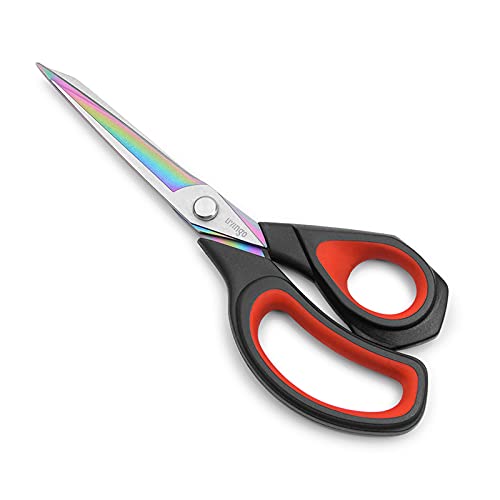
Using a pair of leather scissors, trim fuzz from around the earrings. Be very careful not to cut any of the earring, you’re only cutting the fuzz off of your leather earrings.
You can also smooth the earring by using a burnishing agent. I apply it with a toothpick along the edges. It’s great because it smooths the leather and helps better define the edges.
Place a hole in the top of the earring.
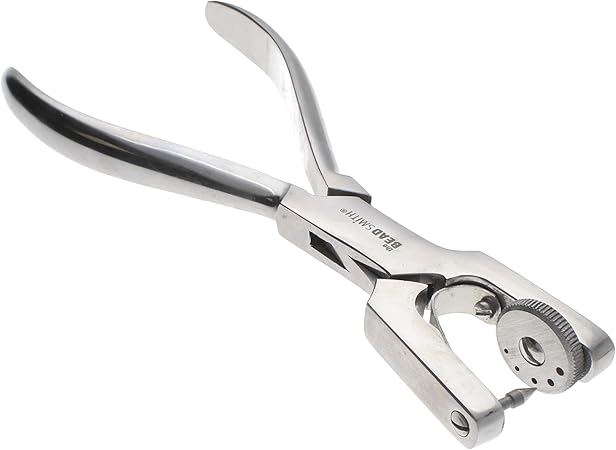
I use a leather punch to put the holes in my DIY leather earrings. The tool linked above cuts through multiple layers of the earring at the same time and punches larger holes (2mm is the smallest).
Open the fish hook earring
The basic fish hook earrings below are easy to work with.
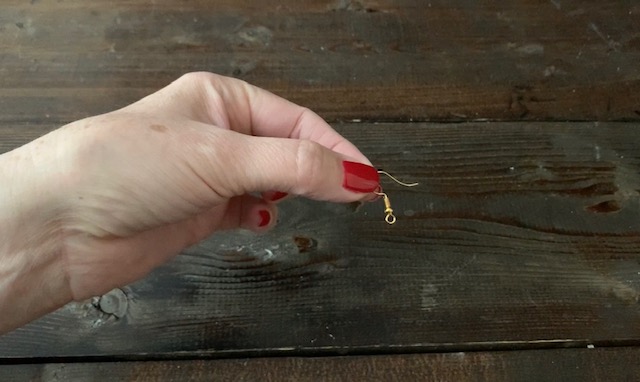
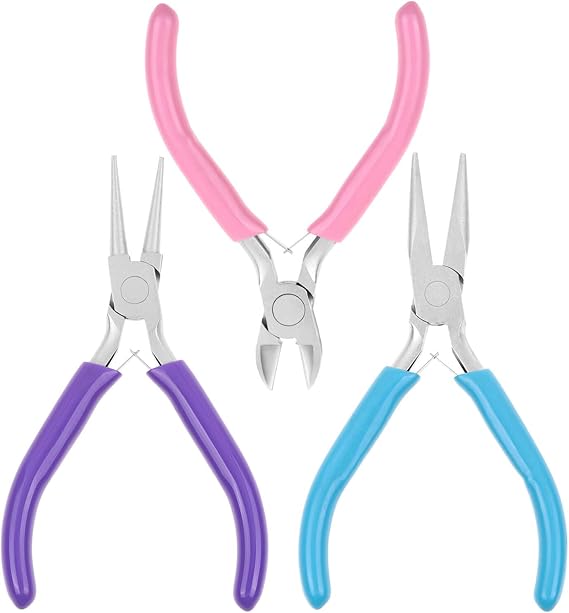
It doesn’t take much to put together earrings. You either need a couple of pairs of pliers or a jump ring tool and one pair of pliers. You can get the two tools below along with a full kit of earring hooks and jump rings on Amazon. It is the perfect starter set. Great for you if you’re getting started and a great gift for anyone that likes to DIY.

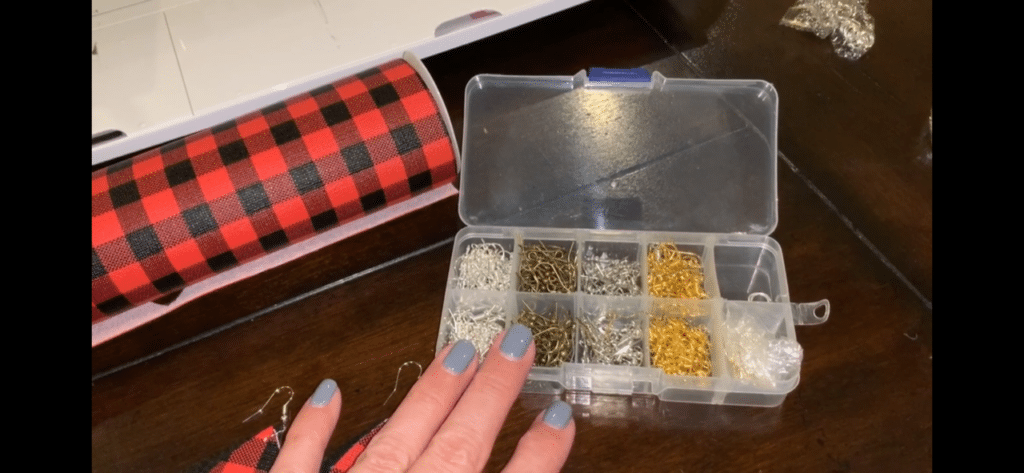
The jump ring tool and pliers below come in the kit linked above.
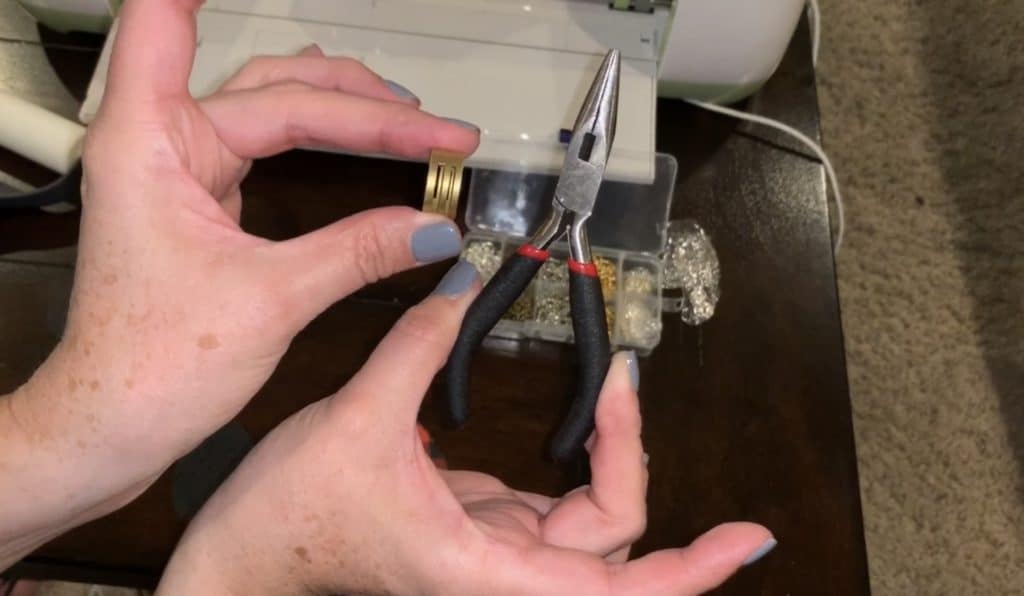
Open the hook
Take a close look at the loop closure at the bottom of the hook and figure out which side is the side that isn’t connected. You may need to lift the ball to see where the opening is.
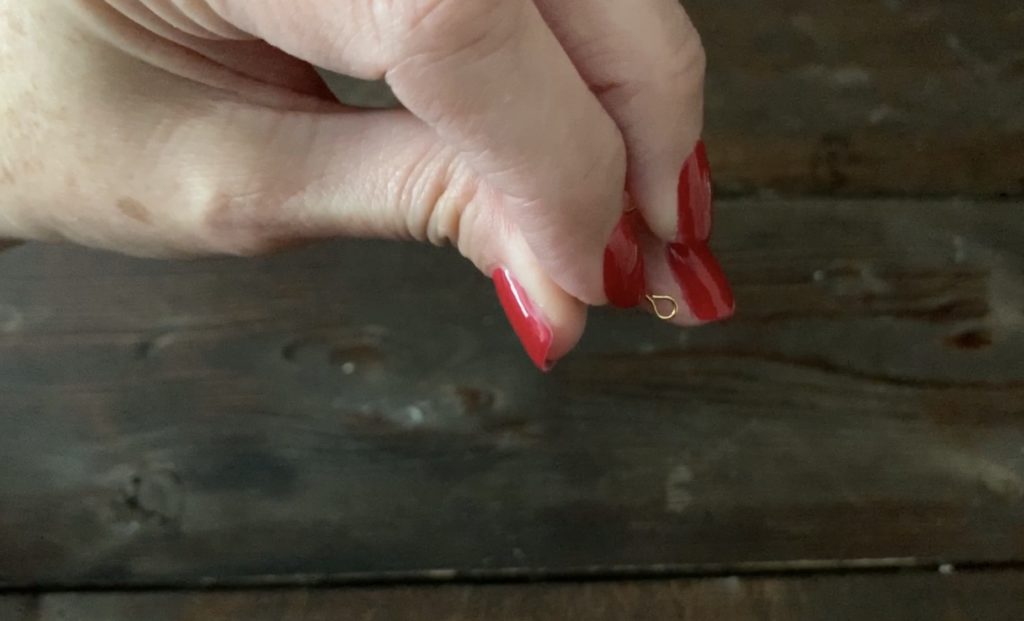
If you want to place your earrings directly on the hook, you can do it by placing pliers on one side of the bottom wire.
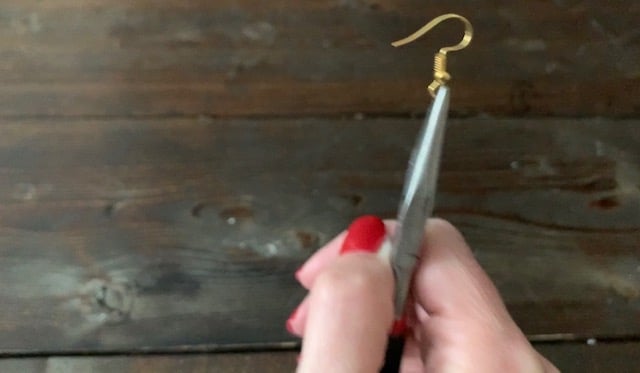
Then place another pair of pliers on the other side of it (the round circle at the bottom of the hook). Don’t place the pliers on the hook above the circle part.
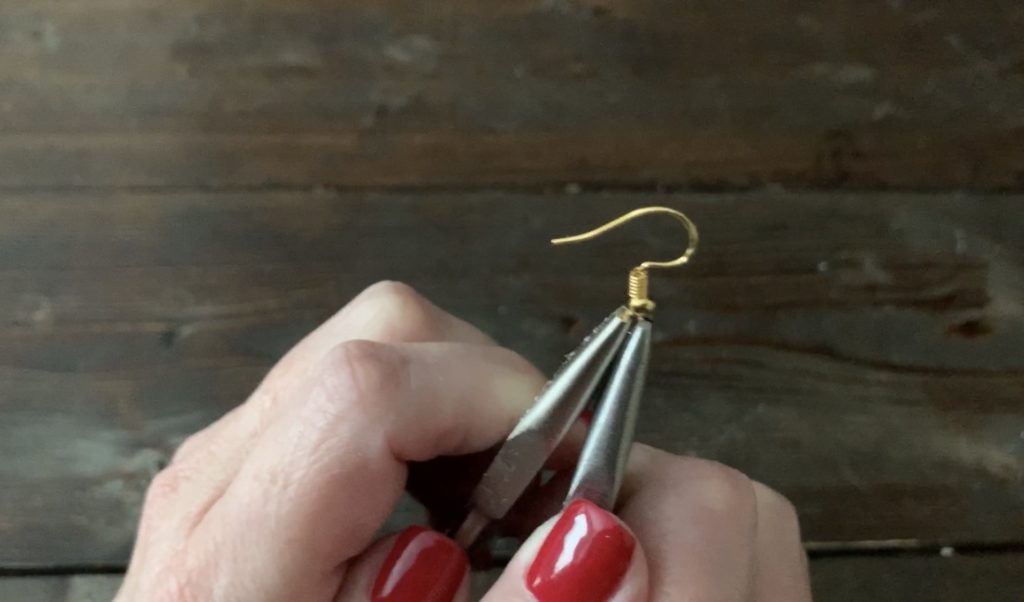
Turn the pliers that is on the side of the circle that isn’t connected to open the loop so that you can put the earring onto the hook.
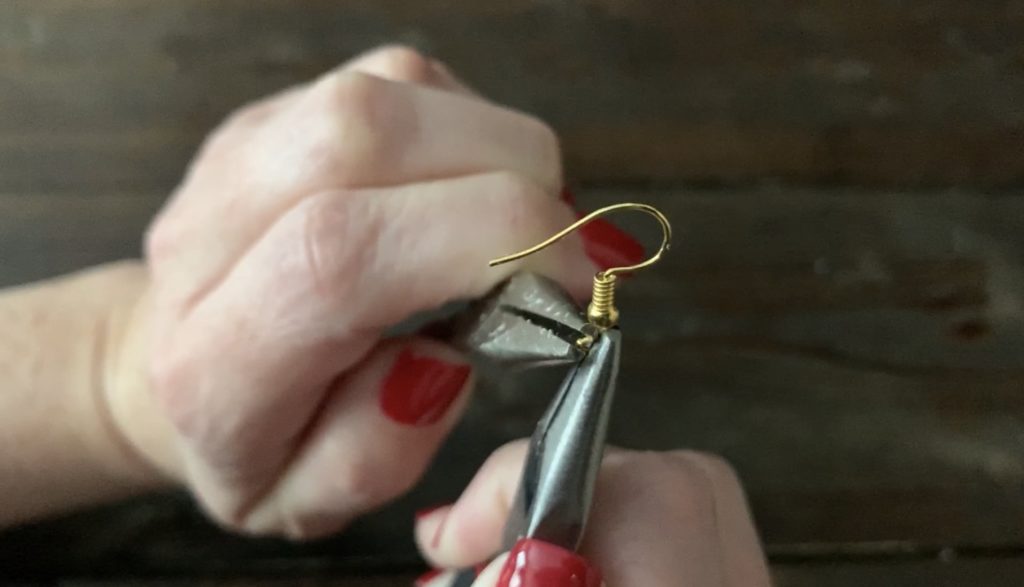
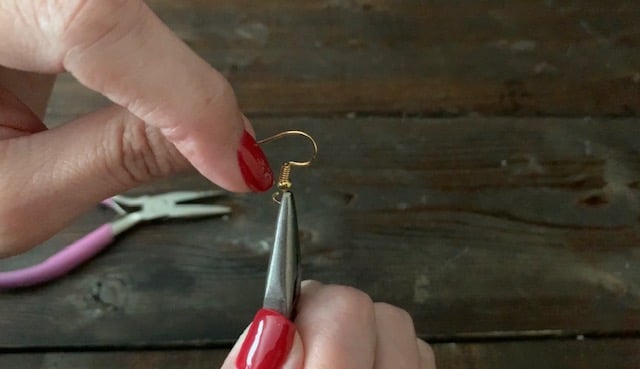
You can then place the earrings in the opening and then close it back up. For these earrings, I chose to use jump rings for a couple of reasons. First, with a two layer earring, it is a little tight in the ring at the bottom of the hook. And second, with a bigger jump ring, the earrings flow and dangle nicely.
Opening Jump Rings
If you decide to dangle the earring from jump rings, you’ll probably want to use two jump rings so that the earrings face toward the front.
A jump ring is a metal ring where the ends meet but are not welded together. This means that with the right tools, you can open it and use it to connect earring components.
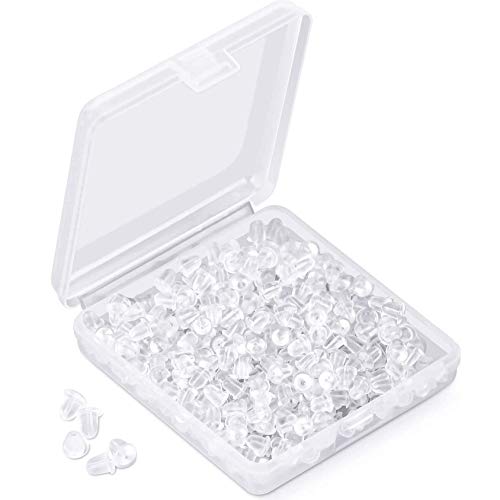
When using jump rings, you must first decide which size of jump rings you want to use. When selecting a jump ring size, consider the impact it will have to the length of your earring hang. In addition, if you’re putting leather and other components into a jump ring consider the thickness of the material. Thicker materials may require a larger size jump ring.
For these earrings I used a 6mm jump ring.
Pick the color of jump rings that you’re going to use and find the location on the jump ring where the ends meet.
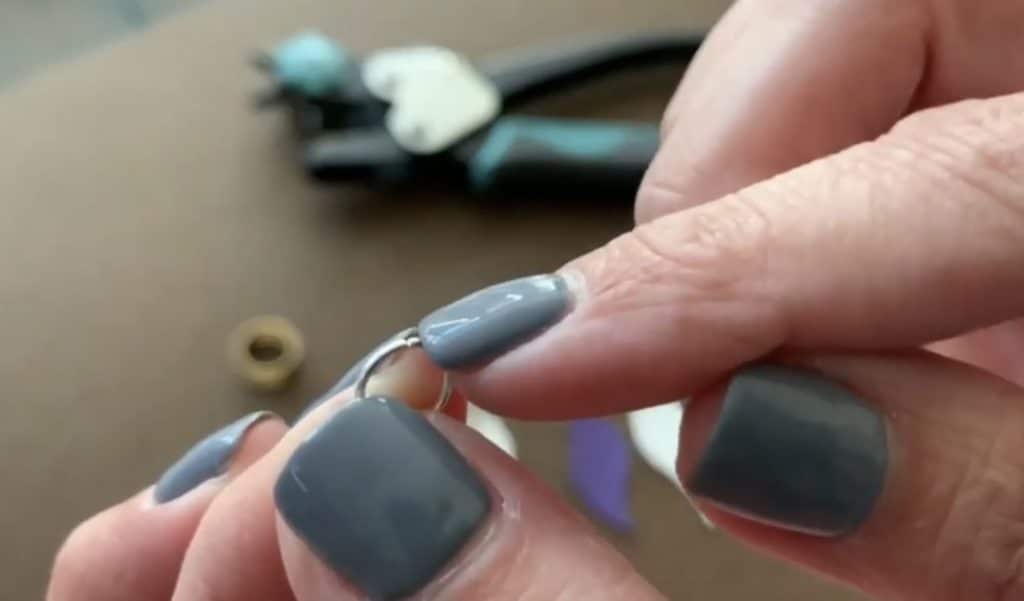
You’ll need to open the jump ring. These are the two tools that I often use to open and close my jump rings.
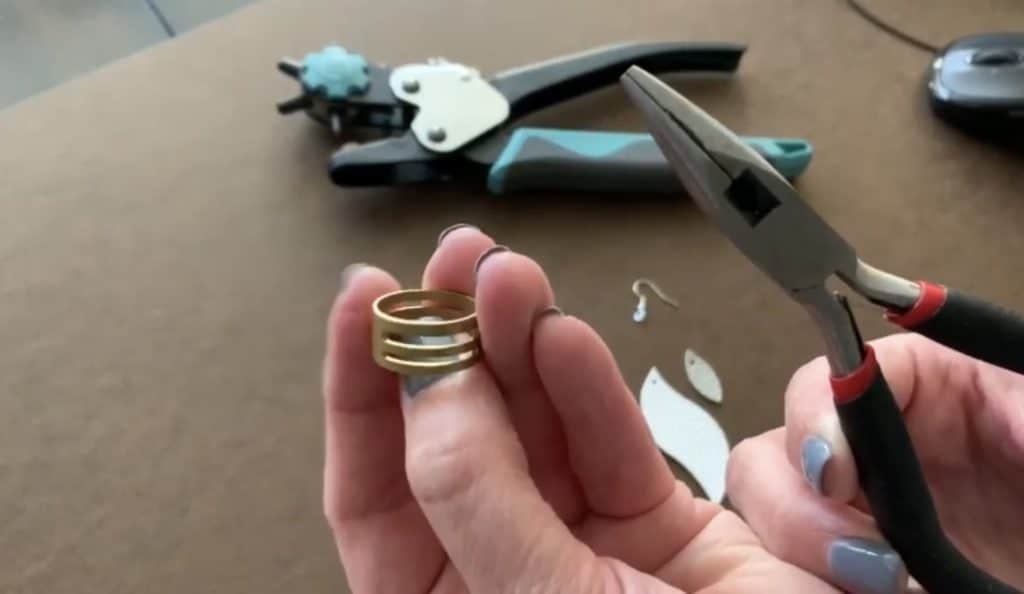
I hold one side of the jump ring with my pliers. With my other hand, I use my jump ring tool to push one side of the jump ring back (to open). It is important not to open the jump ring by pulling them to the left and right. If you do it that way, it will be hard to close the jump ring, while keeping the shape. Instead, push the ring back/front to open the jump ring.
Note: If you’re using the jump ring tool, find the slot on the tool that is sized right for the jump ring.
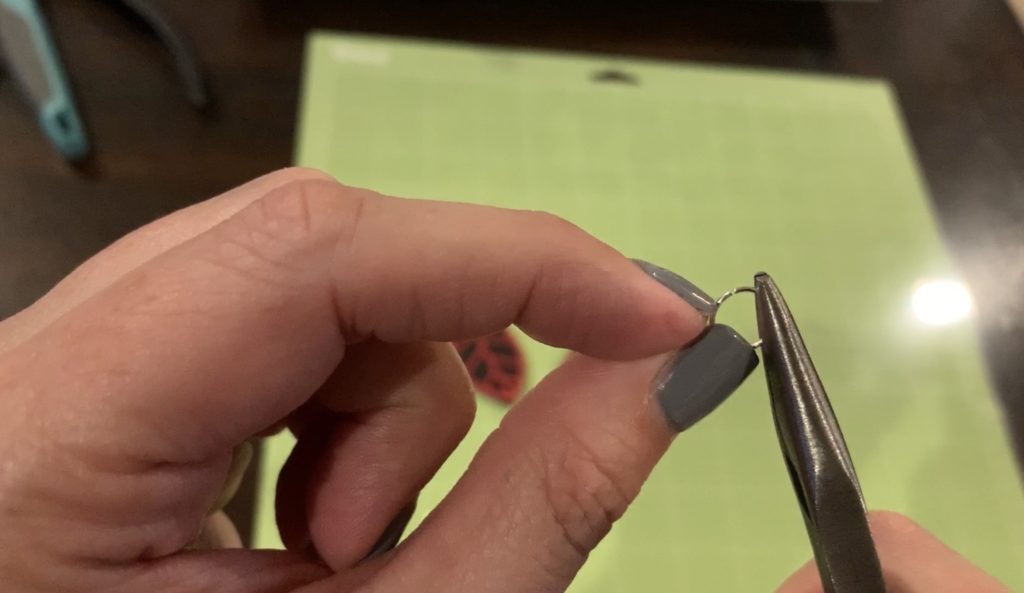
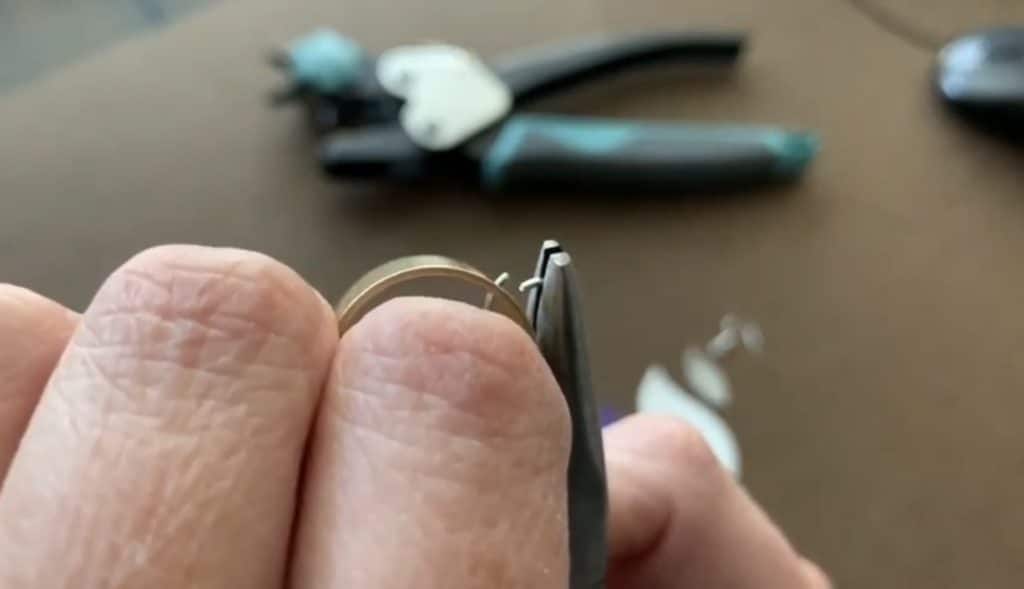
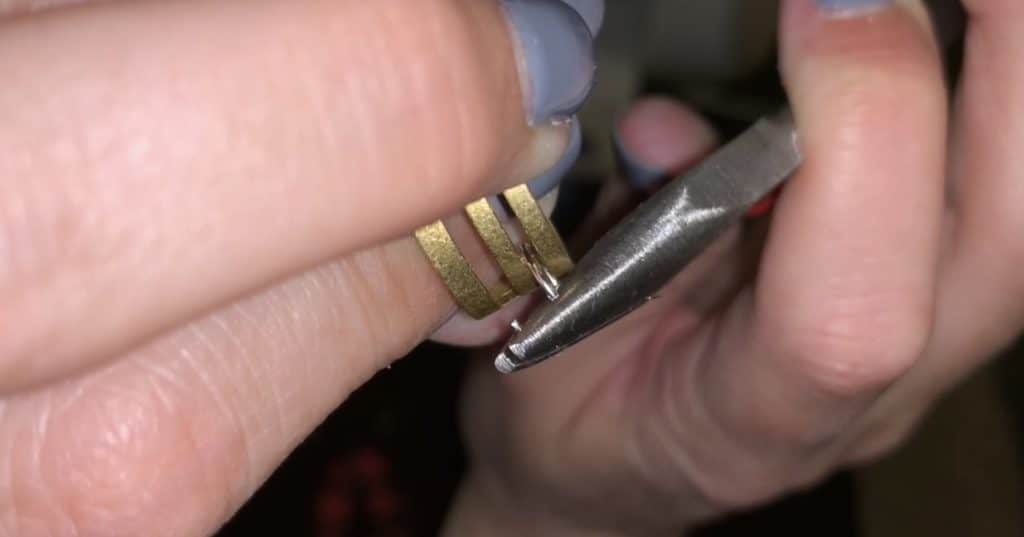
Put your earring onto the jump ring
Put the earrings onto the open jump ring and then close the jump ring.
Close the jump ring.
Once you get the earrings onto the jump ring, use the two sets of pliers (or a set of pliers along with a jump ring tool) to close the jump ring.
And that’s it! Your Halloween earrings diy is finished!
Check out other DIY Earrings Below
Everyday Earrings DIY
- Pinched Leather Earrings DIY (Narrow)
- Painted Feather Leather Earrings
- Leather Hoops
- Disney Inspired Mouse Earrings DIY
- Leather Earrings with Chains
- Circle Cut Out Earrings with Strap
- Leather Bar Earrings DIY
- How to Emboss Leather Earrings
- DIY Angled Fringe Earrings
- Leather Circle Earrings
- DIY Fringe Leaf-Shaped Earrings
- Cross leather earrings
- FRI-YAY Leather Earring DIY
- Leather Bar Earrings DIY (with metal charm)
- How to Make Genuine Leather Earrings
- Statement Earrings
- Teardrop Cork Earrings
- Hollow Faux Leather Earrings – Teardrop and Leaf Shaped
- Faux Leather Tall Stacked Earrings
- Faux Leather Circle Earrings
- Split Teardrop Faux Leather Earrings
- Faux Leather Stacked Marquise Earrings
- Stacked, wavy earrings – KSU
- Faux leather leaf cutout earrings
- Faux Leather earrings with fringe
- Faux Leather Teardrop Earrings
- Faux Leather Bar Earrings
- Faux Leather Leaf Earrings
Sports Earrings DIY
- Football Earrings – Teardrop with football cut out
- Stacked Football earrings
- Chiefs Football Teardrop Earrings
- Chiefs Heart Teardrop Earrings
- Chiefs Arrowhead Earrings
- Chiefs Arrowhead on Teardrop Earrings
My Favorite Leather
My Favorite Faux Leather
Valentine’s Day Earrings DIY
- 40 Great Valentine’s Day DIY Earrings
- LOVE Leather Earrings DIY
- Valentine’s Day earrings DIY (heart shape)
- Heart Earrings DIY (Iron On)
- Heart Earrings DIY (with heart cutout)
- DIY Valentine’s Day Earrings
St. Patrick’s Day Earrings DIY
Easter Earrings DIY
4th of July Earrings DIY
Halloween Earrings DIY
- Boo Teardrop Halloween Earrings DIY
- Halloween Bat Earrings
- Halloween Faux Leather Earrings (Pinched Earrings)
- Halloween Faux Leather Earrings Skulls
- Halloween Faux Leather Earrings Pumpkins
- Halloween Leather Earrings Ghosts
Winter Earrings DIY
- Snowflake Cutout Teardrop Faux Leather Earrings
- Snowman Leather Iron On Earrings
- Buffalo Check Snowman Cutout Earrings